Armrest Wars: Why the Middle Seat Gets Both Armrests (and Other Rules for Flying Three Across)
November 7, 2026
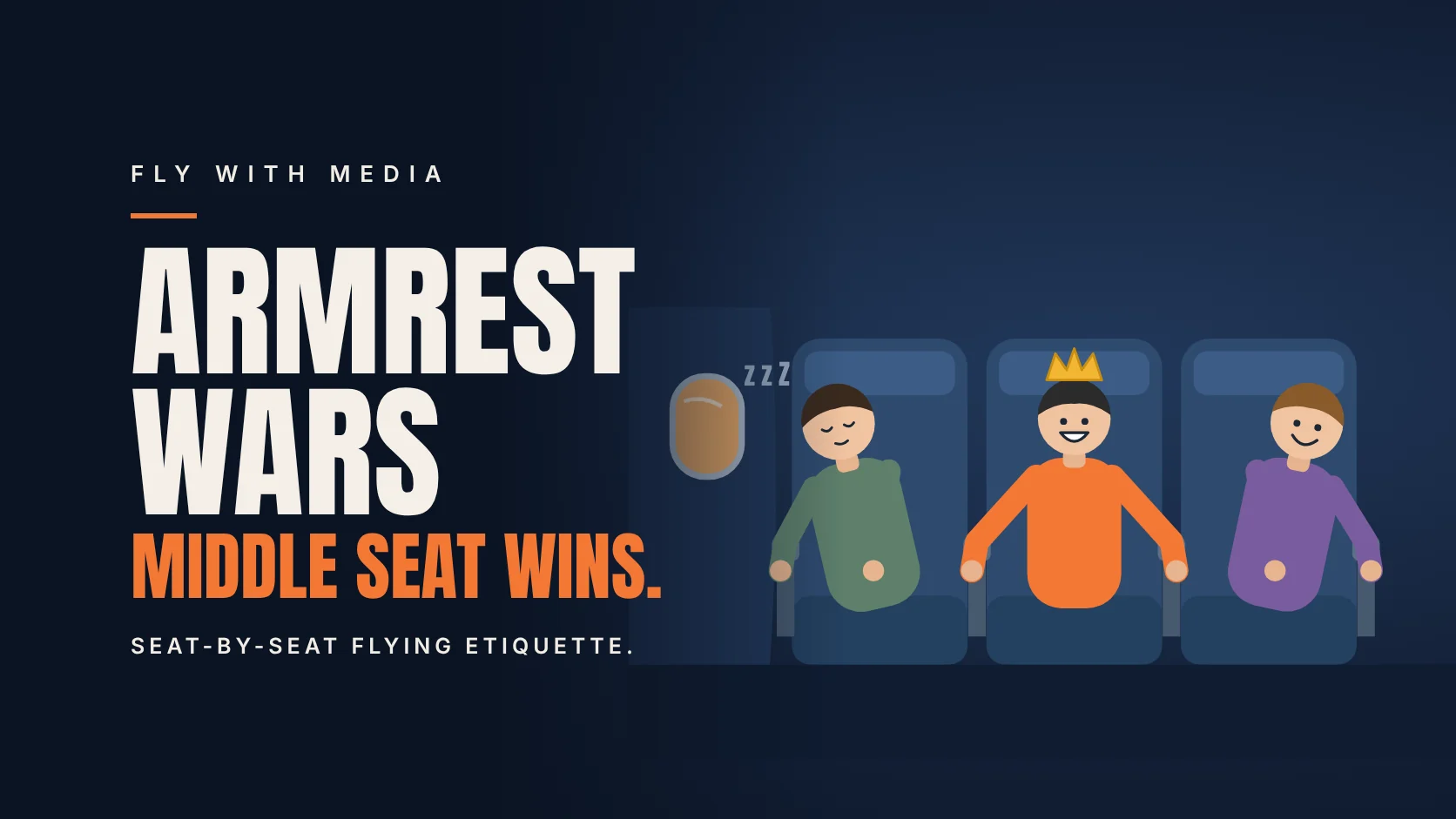
Nobody wakes up hoping for seat 23E. The middle seat is where travel plans go to get squeezed: no wall to lean on, no aisle to escape to, and a stranger's elbow on each side. Sometimes you're stuck there because the flight is full. Sometimes it's the only seat left when the crew booking comes through. Either way, the person in the middle is having the worst flight in the row.
So here at Fly With Media, we live by a simple set of rules for a row of three. They're not airline policy, and no flight attendant will enforce them. They're just the fairest way we know for three strangers to share about five feet of cabin.
The rules, seat by seat
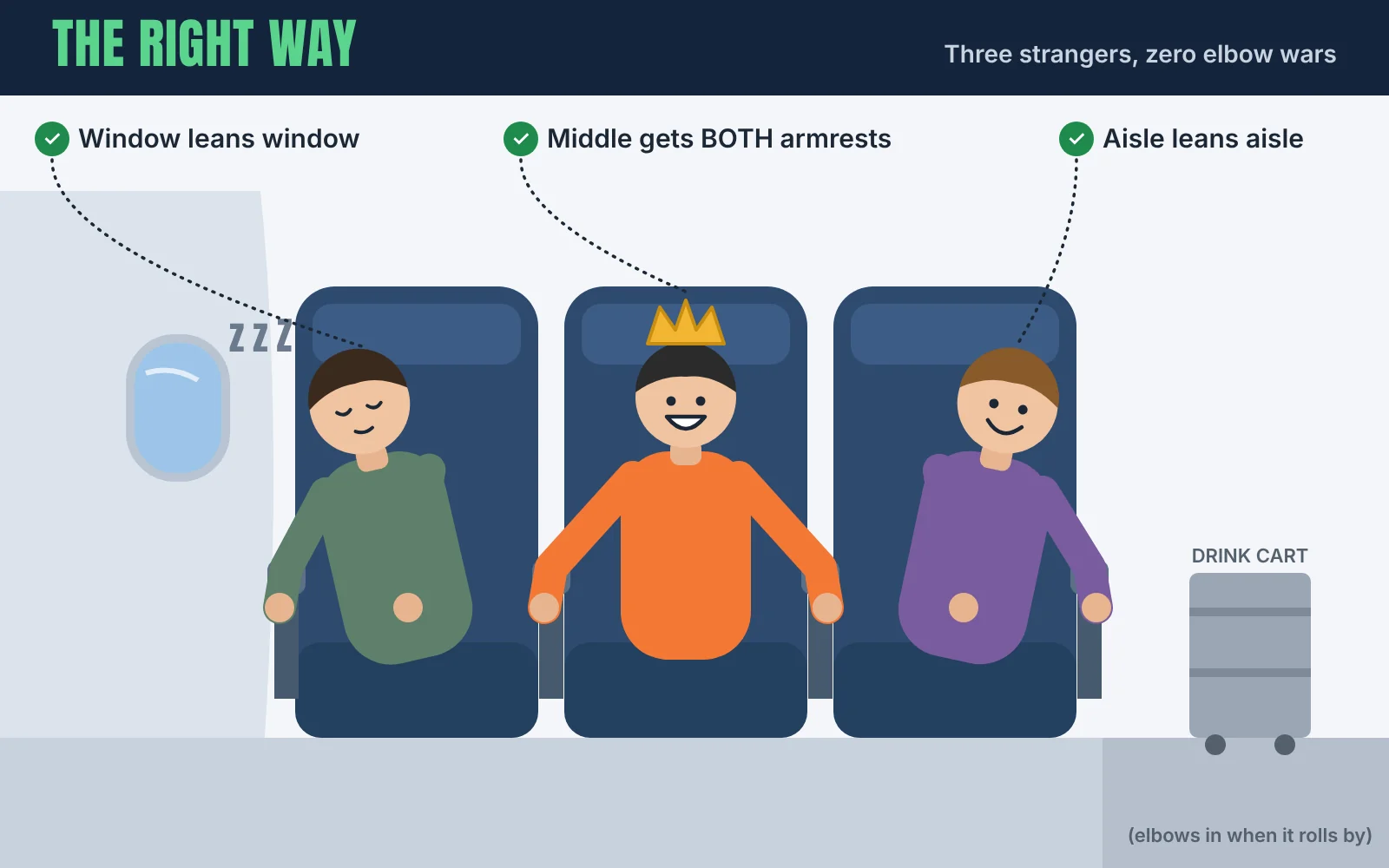
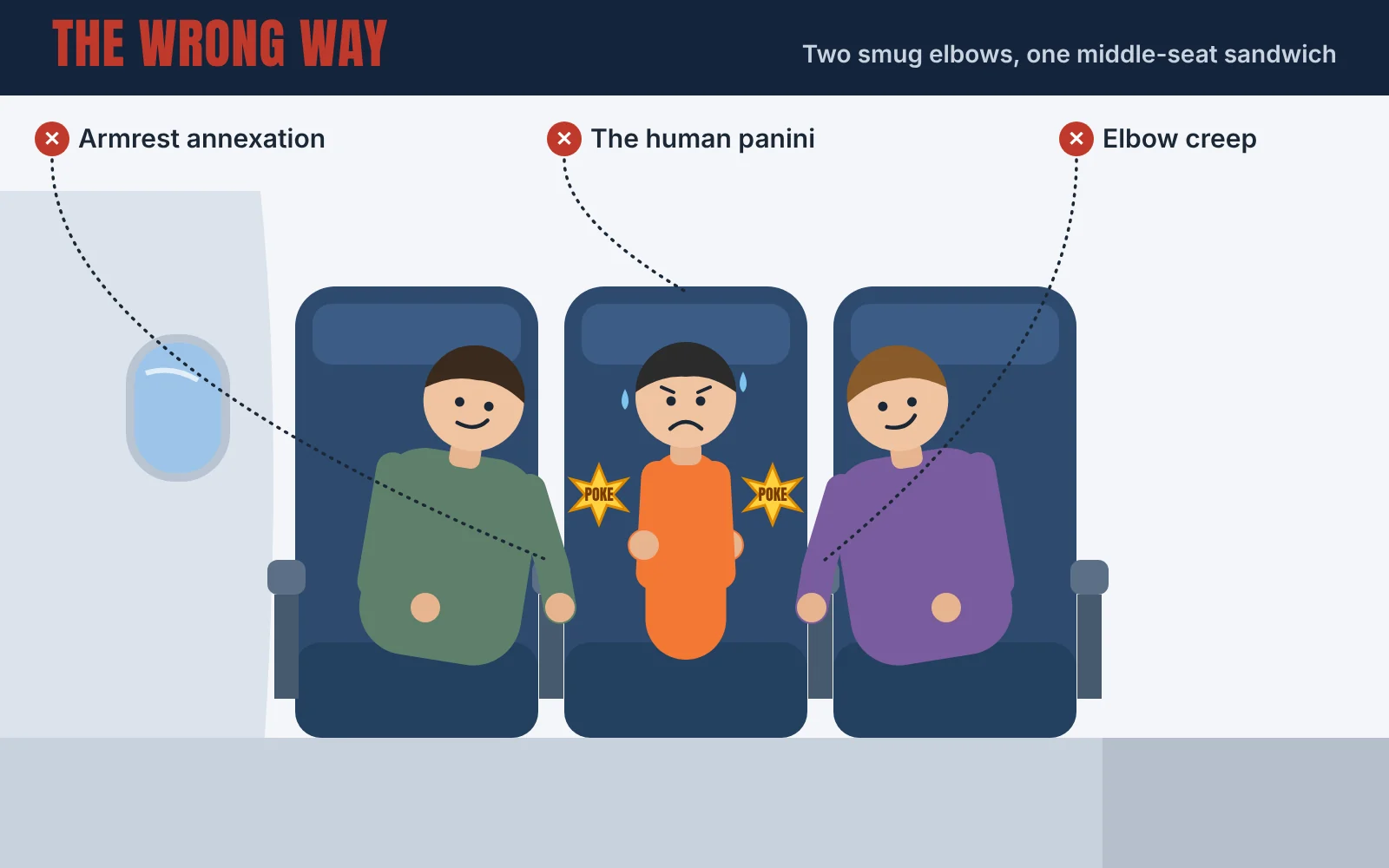
- The middle seat gets both armrests. Both of them. Left and right. They're theirs, and they can choose to lean whichever way they like.
- The window seat favors the window. Lean into the wall, rest on the outside armrest, enjoy the view and the nap spot.
- The aisle seat favors the aisle. Lean out toward the open space, use the outside armrest, and tuck your elbows and knees in when the cart or anyone else comes through.
Why the middle seat wins the armrests
It comes down to what each seat already has. The window seat gets a wall to lean on, a view, and control over when the world goes dark for a nap. The aisle seat gets open space on one side, legroom it can stretch into when the aisle is clear, and the freedom to get up without climbing over anyone. The middle seat gets none of that. All it has is two armrests, so the armrests are the consolation prize. Taking one away from the middle passenger means taking the only thing that seat has going for it.
It also just works better physically. When the window passenger leans toward the wall and the aisle passenger leans toward the aisle, the person in the middle isn't squeezed from both sides, and nobody spends three hours in a silent elbow standoff.
What everyone else thinks
We'll be honest: this is not yet the majority view, though it's gaining ground.
- In a YouGov survey of 1,000 U.S. adults in November 2022, 61% said the middle seat should have an equal claim to the armrests, 16% said it should have more, and just 7% said less. 16% weren't sure.
- In a newer YouGov poll for The Points Guy published in August 2026, 11% said the middle passenger should automatically get both armrests and 20% said the middle should get priority while everyone shares. That's nearly a third of people giving the middle seat the edge. 31% said everyone should share equally, and 26% weren't sure what the etiquette even is.
That last number might be the most telling one. A quarter of travelers don't know the rule, which is exactly why an armrest can turn into a three-hour standoff. Somebody has to say it out loud, so we are: the middle gets both.
The psychology of the armrest
Why does a strip of plastic a couple of inches wide cause so much quiet resentment? Because it's about personal space, and an airplane takes almost all of it away.
Gear Toolkit
Plan your gear once. Pack any trip in minutes.
Plan your gear once. Pack any trip in minutes. Free during beta, no account needed to try.
Try the Toolkit freeAnthropologist Edward T. Hall, who coined the study of personal space ("proxemics"), described the zone within about 18 inches of us as intimate space, normally reserved for people we're close to. In economy class, strangers sit well inside it for hours. The armrest becomes the only border anyone can claim.
Research backs up how much that matters. A 2017 study in the journal Ergonomics, "What makes a space invader?" by researchers at the University of Nottingham, found that passengers feel their personal space is invaded not only by physical contact with other people, but also by noise, smells and unwanted eye contact. An elbow on "your" armrest is just the most visible invasion.
And it isn't new. A study from St. Bonaventure University, "Sex and the Single Armrest," first published in 1982, watched passengers in coach and found that men were much more likely to take the shared armrest, even after accounting for body size. People who were used to getting the armrest also felt angrier when they were denied it. In other words, armrest habits are learned, and so is the frustration.
That's the case for a clear rule. When everyone knows who the armrests belong to, there's nothing to fight over.
How to live the rules without starting a fight
- In the middle? Don't be shy. A friendly "mind if I take the armrests?" at boarding settles it before anyone gets comfortable.
- At the window? Lean in, use the wall and the outside armrest, and keep your elbow out of the middle seat's space.
- On the aisle? Use the outside armrest and lean out, but watch for the cart, elbows and knees coming down the aisle.
- Traveling as a crew? If three of you are in one row, decide before you board. Give the middle seat to whoever has the shortest flight, the smallest bag, or the least seniority, and then give them both armrests. It's the least you can do.
The bottom line
The middle seat gets both armrests. The window leans window. The aisle leans aisle. It isn't in any airline's contract of carriage, but it's the closest thing a row of three has to a peace treaty. Next time you're in 23D or 23F, give the person in the middle a little room. You might be the one in 23E next time.
Sources: YouGov flight etiquette survey (Nov. 2022); The Points Guy / YouGov airplane etiquette survey (Aug. 2026); Lewis et al., Ergonomics, 2017; Hai, Khairullah & Coulmas, "Sex and the Single Armrest," 1982.
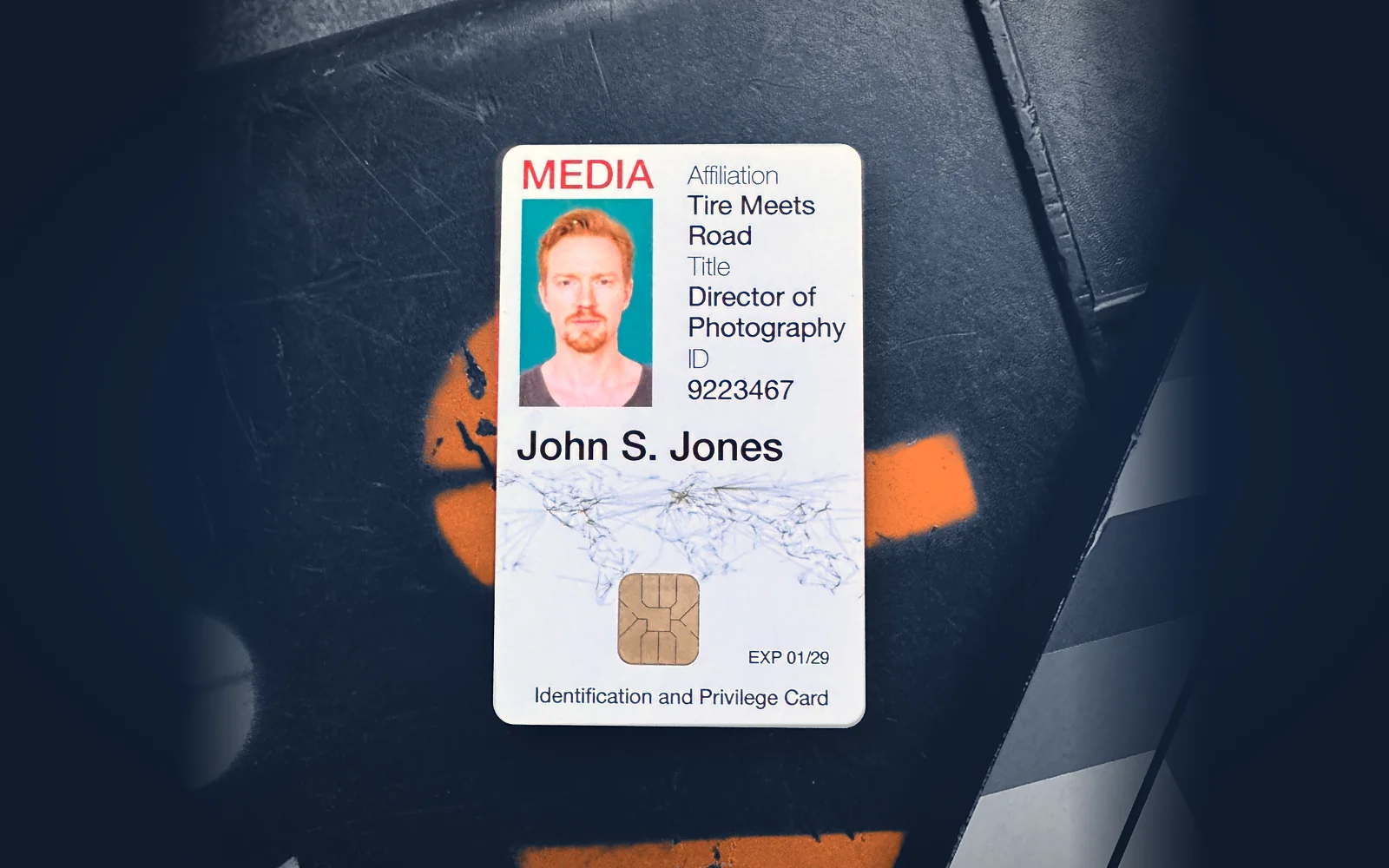
Media ID card
Traveling with gear? Carry proof you're a working media professional.
The Fly With Media ID card: $119 for two cards, logo included, valid four years, plus 60 days of Toolkit Pro when the beta ends.
Get your ID card