


💻 Updated May 2026
Virgin Atlantic no longer offers special media baggage rates. As of mid-2025, all film, photography, and journalism equipment is subject to the airline's standard checked baggage policies and fees — no exemptions, no special pricing, no credential-based waivers. This guide explains exactly what that means for working media professionals, how to minimize costs, and how to move your gear safely.
What Changed and Why It Matters
Media rates were a legacy holdover from an era when airlines actively courted press and production travel. Virgin Atlantic's decision to eliminate them entirely puts the full weight of baggage fees on photographers, videographers, journalists, and film crews flying its routes.
What no longer applies:
- Special pricing for film, photography, or broadcast equipment
- Size or weight exemptions for professional gear
- Fee waivers based on media credentials or press cards
If you previously relied on a media rate when booking Virgin Atlantic, plan for higher costs and build that into your production budget.
Standard Baggage Allowances by Cabin Class
All limits below apply to Virgin Atlantic-operated flights. If your flight number starts with "VS" but is operated by a partner airline, Virgin Atlantic's allowances still apply.
Carry-On (Hand Baggage)
All ticket classes include carry-on baggage. The maximum cabin bag size is 56 × 36 × 23 cm (22 × 14 × 9 in). Underseat bags must not exceed 40 × 30 × 15 cm.
- Economy (Light, Classic, Delight) and Premium: 1 cabin bag + 1 underseat bag, combined weight up to 10 kg (22 lb)
- Upper Class: 2 cabin bags + 1 underseat bag, combined weight up to 16 kg (35 lb), with no single bag exceeding 12 kg
Virgin Atlantic enforces the 10 kg carry-on limit at check-in on busy transatlantic routes, particularly from Heathrow and Manchester. If your camera bag looks heavy, expect it to be weighed.
Checked Baggage
Standard weight limit per bag is 23 kg (50 lb) with maximum dimensions of 90 × 75 × 43 cm (35.5 × 29.5 × 16 in). Upper Class passengers are allowed bags up to 32 kg (70 lb).
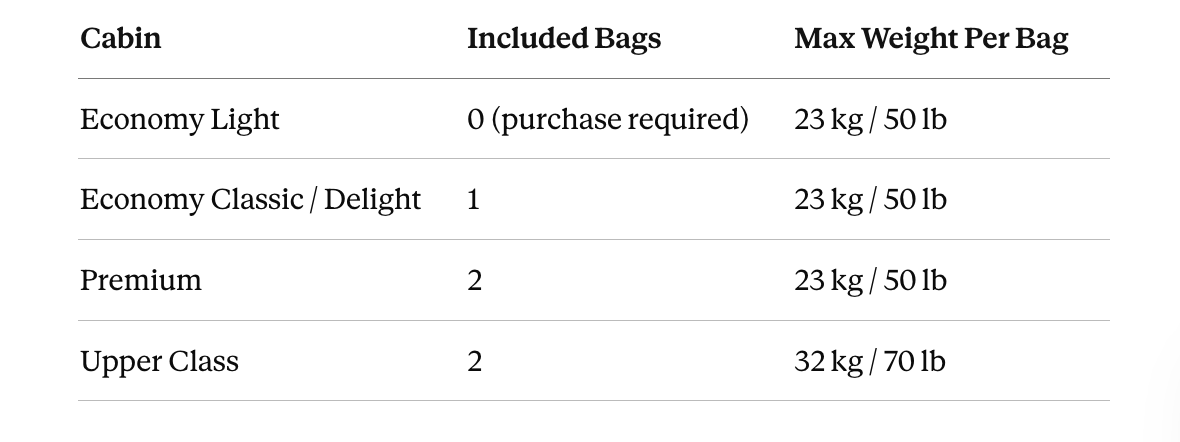
Note: On UK/US/Canada–India routes, Economy Classic and Delight passengers receive two bags as standard. UK–Ghana routes also have modified allowances. Check your specific route when booking.
Oversize and Overweight Fees
These are the fees that will hit media professionals hardest.

Oversized fees must be paid at the airport — you cannot pre-pay online for oversized baggage. If a piece of gear exceeds 190 × 75 × 65 cm, it cannot be checked at all and must be shipped as cargo through a freight forwarder. Virgin Atlantic cannot arrange this on your behalf.
Bags over 32 kg (70 lb) are not accepted as checked luggage under any circumstances due to handling regulations. Heavy production cases must be broken down or shipped as cargo.
Extra Baggage Fees (Additional Pieces)
Economy Light passengers pay for every checked bag. All other classes pay extra bag fees once they exceed their included allowance. Prices vary by route and are always cheaper when purchased online in advance — airport add-ons are significantly more expensive.
Add bags via Manage Booking online up to 24 hours before departure for the best rates.
Flying Club Status: A Benefit for Gear-Heavy Travellers
If you fly Virgin Atlantic regularly, Flying Club status is one of the few remaining ways to reduce baggage costs without paying for a premium cabin.
- Silver members receive 1 extra checked bag (up to 23 kg) free on all Virgin Atlantic-operated flights, regardless of cabin class.
- Gold members also receive 1 extra checked bag (up to 23 kg) free on all Virgin Atlantic-operated flights.
This applies even to Economy Light fares, where no bag is normally included. For a media professional who would otherwise pay for an extra bag on every trip, this benefit has real cash value.
Lithium Batteries: The Critical Rule for Media Professionals
Camera batteries, drone batteries, power banks, and portable chargers are subject to strict rules that differ from standard baggage.
Carry-on only — never in checked luggage:
- All spare lithium-ion batteries (camera batteries, camcorder batteries, etc.)
- Power banks and portable chargers
- Batteries exceeding 100 Wh but not exceeding 160 Wh require airline approval and are limited to two per passenger
What this means in practice: Your camera bodies may be in a checked Pelican case, but every spare battery must travel in your carry-on. This is not a preference — it is an IATA/airline requirement. Batteries found in checked bags at security can result in the bag being pulled and the batteries confiscated or the flight delayed.
Pack spare batteries in individual protective cases or in a dedicated battery organizer pouch. Label them clearly and keep them accessible for security screening.
Practical Packing Strategy for Media Professionals
Carry On Your Most Critical Gear
Cameras, primary lenses, memory cards, and all batteries should travel in the cabin with you. Airlines take no responsibility for lost or damaged valuables in checked baggage. If a checked bag is delayed, you need to be able to shoot with what you have in the cabin.
Check the Heavier, More Replaceable Equipment
Flash units, grip equipment, light stands, reflectors, and spare chargers are better candidates for checked bags. If they're delayed, you can often work around their absence; if your camera bodies are delayed, the job stops.
Use a Hard Case for Checked Gear
A Pelican or similar hard-shell case is the right solution for checked media equipment. Choose a case with a TSA-approved lock and keep a detailed packing list inside. Photograph the packed contents before closing it. This matters for insurance claims if anything is damaged.
Weigh and Measure Before You Leave
The 23 kg limit is enforced. A single kilogram over costs £65/$100. Weigh your packed cases at home with a luggage scale — they cost very little and pay for themselves on the first trip where they prevent an overweight fee.
Watch the Dimensions on Large Cases
A standard Pelican 1610 or similar rolling hard case typically comes in around 56 × 46 × 25 cm — within Virgin Atlantic's checked bag dimension limit. Larger cases (Pelican 1650, Pelican Air 1615) exceed the 43 cm depth limit and will incur the £200/$300 oversized fee. Know your case dimensions before you get to the airport.
Consider Shipping Gear Ahead
For large productions or extended assignments, shipping equipment directly to your destination via a freight or courier service can be cheaper than paying oversize and overweight fees on multiple bags. This is especially worth considering for bulky grip equipment, large lighting rigs, or heavy audio gear.
At the Airport: What to Say and How to Handle It
If gate staff push back on the size or weight of your carry-on camera bag:
- Calmly state that the bag contains fragile professional equipment that cannot be checked due to damage risk.
- Reference your airline's stated carry-on allowance and dimensions if your bag is within limits.
- If you have insurance documentation or a letter from a client specifying equipment requirements, have it accessible.
Virgin Atlantic cabin crew are generally professional and reasonable. The issue is more likely to arise at gate checks on full flights where overhead bin space is limited. Boarding early (available with certain fare classes or as a paid add-on) reduces this risk.

Baggage fees and allowances are subject to change. Always verify current policy at virginatlantic.com before travelling.


