


Hawaiian Airlines does not offer a dedicated media baggage rate. All film, photography, broadcast, and journalism equipment is subject to the airline's standard checked baggage policies and fees — no exemptions, no special pricing, and no waivers for media credentials. This guide covers the current fee structure (including the April 2026 increases), route-by-route differences, how to reduce costs through loyalty status and credit card benefits, and how to move gear safely.
What Changed: April 2026 Fee Increase
Hawaiian Airlines, now operating under the combined Alaska Air Group umbrella, raised its North American checked baggage fees in April 2026, in line with increases across the Alaska Airlines network.
Due to ongoing volatility in fuel prices and an uncertain global environment, fees increased $5 for the first checked bag and $10 for the second. The new fees apply to flights booked on or after April 10, 2026.
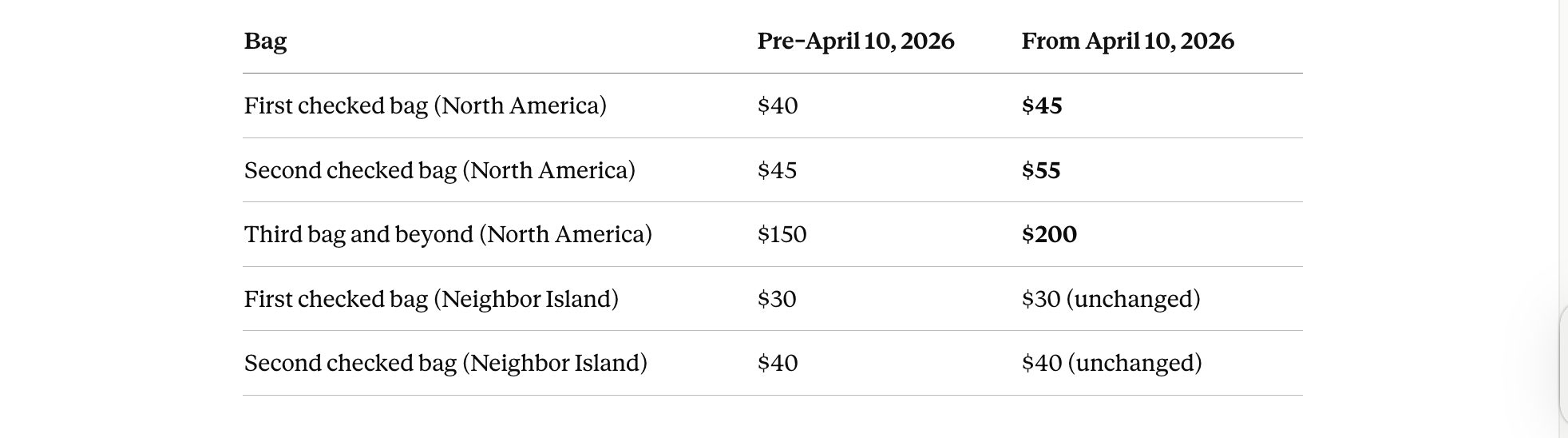
Atmos Rewards status members and eligible cardholders of an Atmos Rewards Visa or Hawaiian Airlines Mastercard continue to enjoy their current baggage benefits and are not affected by this change. The inter-island (Neighbor Island) fee schedule was also left unchanged by the April 2026 increase.
Standard Baggage Rules by Route
Hawaiian Airlines operates three distinct route types, each with different rules. Getting these wrong is one of the most common and costly mistakes for media professionals.
Carry-On (Cabin Baggage)
Every fare on every route includes one carry-on bag and one personal item at no charge.
- Carry-on bag: Maximum 22 × 14 × 9 inches (56 × 36 × 23 cm) including handles and wheels, or 45 linear inches total. Maximum weight: 25 lbs (11.5 kg). This is a published, enforced weight limit — stricter than Alaska Airlines and many U.S. carriers.
- Personal item (purse, laptop bag, small backpack, briefcase): Must fit completely under the seat in front of you. No dimensions published — the seat pocket is the test.
Important for media professionals: Hawaiian enforces its 25 lb carry-on weight limit. A camera bag packed with two bodies and three lenses can easily hit that threshold. Weigh your carry-on before you arrive. If overhead bins are full, Hawaiian may gate-check carry-on bags — keep all batteries, memory cards, and irreplaceable items in your personal item so they stay with you even if the carry-on gets pulled.
Checked Baggage — Standard Limits (All Routes)
All checked bags must not exceed 50 lbs (22.7 kg) in weight and 62 linear inches (length + width + height combined) in total dimensions.
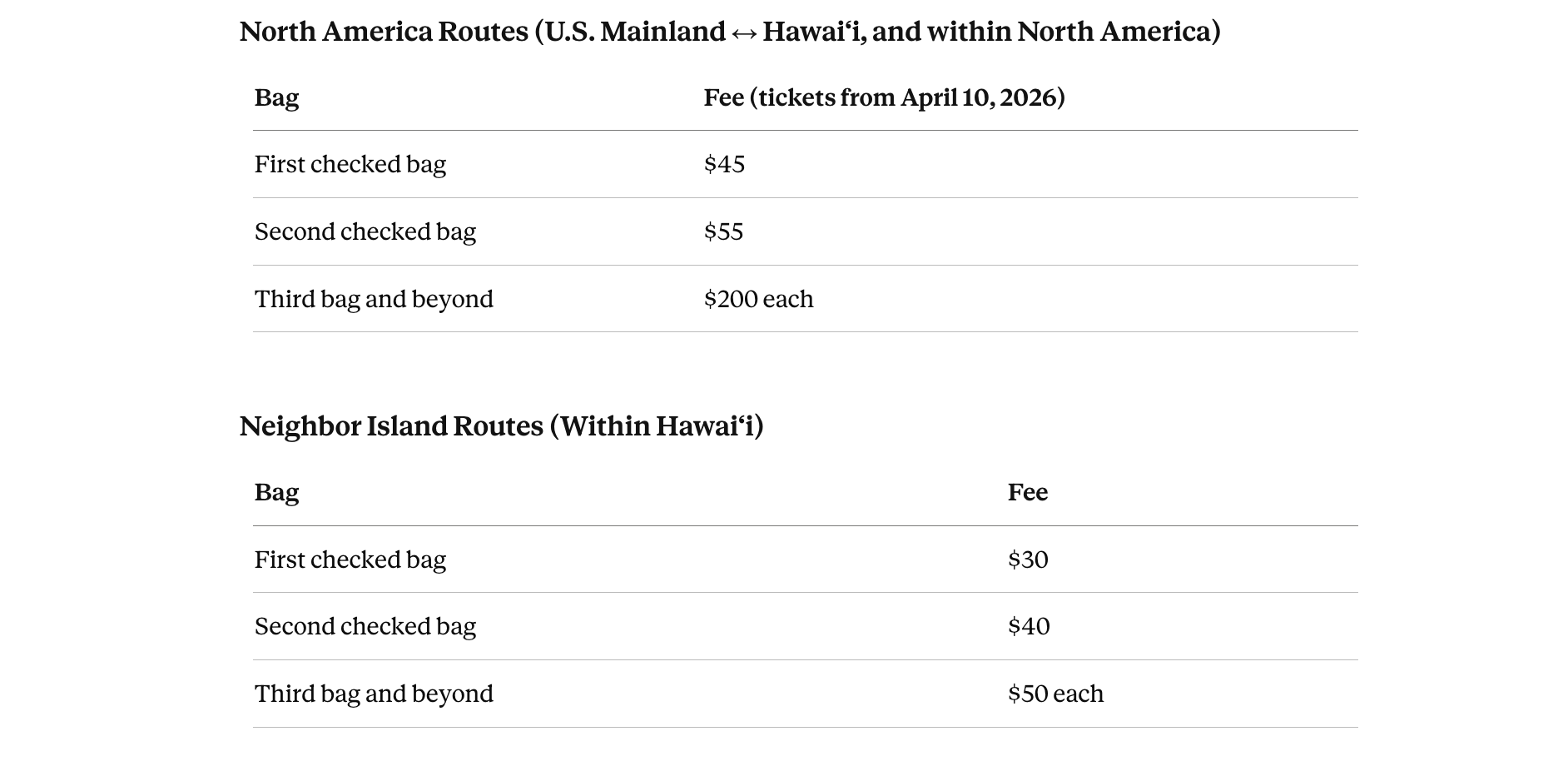
North America Routes (U.S. Mainland ↔ Hawaiʻi, and within North America)
International Routes (Japan, South Korea, Australia, and Pacific)
Most international routes (Japan, Korea, etc.) include the first and second bags free for economy passengers. Australia and New Zealand routes include the first bag free, with the second bag at $100. This makes Hawaiian's international routes notably generous for media professionals traveling on transpacific assignments — often providing two free bags that domestic travelers pay for on every leg.
Always verify your specific itinerary. International bag rules vary by fare class and direction of travel. Confirm at booking, not at check-in.
Overweight and Oversize Fees
This is where costs escalate fastest for crew traveling with camera cases, audio equipment, grip gear, and lighting.
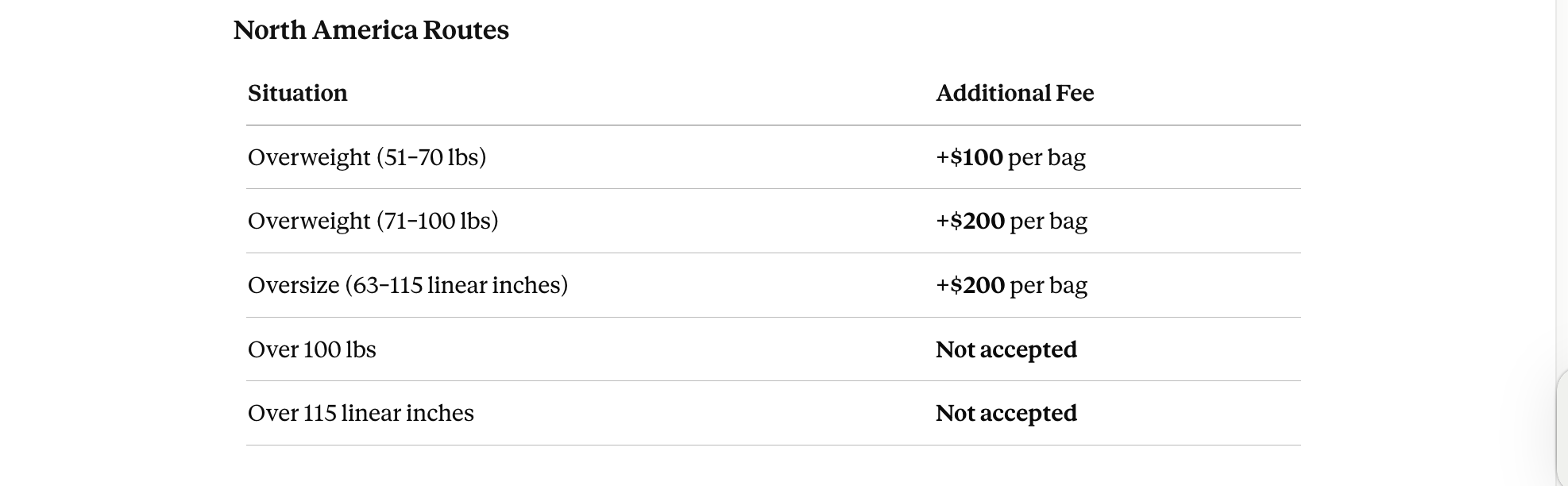
If a bag is both overweight and oversized, both fees apply and are cumulative. A 60 lb case measuring 75 linear inches would trigger both the $100 overweight fee and the $200 oversize fee — meaning a single bag costs $45 (bag fee) + $100 (overweight) + $200 (oversize) = $345, each direction.
International Routes
Overweight fees (51–70 lbs) range from $50–$200 depending on destination. Oversized bags on international routes incur fees of $150–$200. Bags over 100 lbs are generally not accepted on most international routes.
First Class Passengers
First Class passengers now benefit from a 70 lb weight allowance per bag before the overweight fee applies — up from the standard 50 lb economy limit. This is a meaningful advantage for gear-heavy travel: a production case weighing 60 lbs that would incur a $100 overweight fee in economy travels free of overweight charges in First Class.
Who Gets Free or Discounted Bags
Atmos Rewards Elite Status
HawaiianMiles and its Pualani Elite tiers transitioned to the combined Atmos Rewards program on October 1, 2025. Former Pualani Elite members are now status holders in Atmos Rewards, with equivalent status levels. The free bag benefits by tier as of 2026:
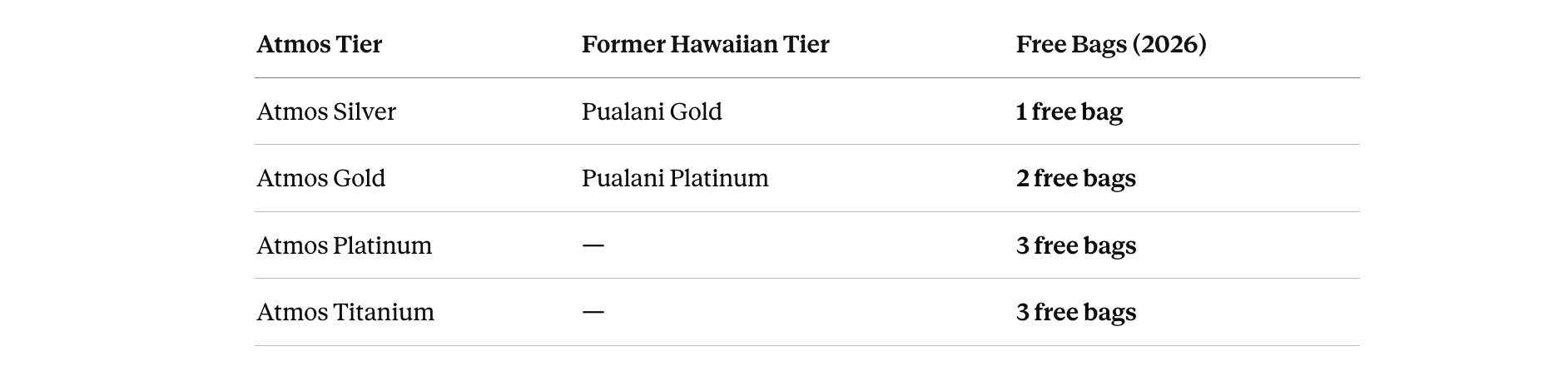
Note: Starting in 2026, free checked bags for Atmos Silver (formerly Pualani Gold) dropped from two to one. If you previously held Pualani Gold status and relied on two free bags, budget for the additional bag fee.
Free bag benefits apply for the elite member plus companions on the same booking. As with all status benefits, these cover standard checked bag fees only. Overweight and oversize surcharges apply regardless of status tier.
Hawaiian Airlines World Elite Mastercard
Holders of the Hawaiian Airlines World Elite Mastercard receive two free checked bags on eligible flights when the airfare is purchased directly from Hawaiian Airlines or Alaska Airlines using the card. This is more generous than the Alaska Airlines Visa (which covers one bag) and is a significant benefit for media professionals who check two bags on most trips.
The benefit applies only when the ticket is purchased directly from Hawaiian Airlines or Alaska Airlines with the card — third-party bookings do not qualify. Overweight and oversize fees still apply.
Huakaʻi by Hawaiian (Hawaiʻi Residents)
Huakaʻi by Hawaiian benefits continue for local members, including one free checked bag on flights between the Neighbor Islands. Interisland media assignments — traveling between Oʻahu, Maui, the Big Island, and Kauaʻi with equipment — benefit directly from this program, which is free to join for Hawaiʻi residents.
Lithium Batteries: The Non-Negotiable Rule for Media Professionals
This is the most operationally critical rule for photographers, videographers, and audio/video crews. It is a federal FAA requirement, not just an airline preference.
All spare lithium batteries must travel in carry-on baggage only. They cannot be in checked bags under any circumstances.
This applies without exception to:
- Camera batteries (LP-E6, EN-EL15, NP-FZ100, DMW-BLF19, etc.)
- Cinema and camcorder batteries (V-mount, Gold Mount, Anton Bauer, IDX)
- Drone batteries
- Power banks and portable chargers
- Laptop spare batteries
- Audio recorder batteries (NP-F, AA battery packs)
Batteries installed inside a device (e.g., a laptop with its internal battery) may travel in checked bags if the device is fully powered off and protected from accidental activation. Any spare battery — loose, in a protective case, or in a battery pouch — must be in the cabin.
Watt-hour limits per FAA rules:
- Up to 100 Wh: No restriction; carry-on permitted.
- 101–160 Wh: Maximum two spare batteries per person, carry-on only, airline approval required in advance.
- Over 160 Wh: Not permitted on passenger aircraft. Must ship as dangerous goods cargo.
Most consumer camera batteries fall well under 100 Wh (LP-E6: ~14 Wh, EN-EL15c: ~16 Wh). Large Anton Bauer Dionic HD batteries (~96 Wh) also fall under the limit. High-capacity V-mount batteries at 190 Wh and above cannot fly on commercial aircraft — they must be shipped separately via approved dangerous goods freight, which requires advance planning on any international assignment.
Pack spare batteries in individual protective cases or a dedicated battery organizer pouch. Remove them from your checked cases before drop-off. This is a non-negotiable part of the pre-travel checklist.
Practical Packing Strategy for Hawaiian Airlines
Camera Bags and the 25 lb Carry-On Weight Limit
Unlike Alaska Airlines (which has no published carry-on weight), Hawaiian enforces a 25 lb limit. A typical professional camera setup:
- 1 mirrorless body (~1.5 lb) + grip (~0.5 lb)
- 2–3 lenses (~1.5–3 lb each)
- Spare batteries, charger, filters
- Memory cards and a card reader
- Laptop or tablet (3–5 lb)
That adds up to 10–15 lbs easily. A second body, longer glass, or a full laptop can push toward the 25 lb ceiling. Weigh your carry-on bag at home and redistribute accordingly. If you're over the limit at the gate, Hawaiian can require you to check the bag, incurring the first bag fee on top of potentially scrambling to remove batteries from the case before it goes in the hold.
Carry On the Irreplaceable, Check the Rest
Cameras, lenses, memory cards, and all spare batteries must travel in the cabin. Flash units, audio recorders, light modifiers, stands, and grip equipment are better checked. If checked cases are delayed, you can often still work around it; losing camera bodies ends the assignment.
Hard Cases for Checked Gear
Pelican, SKB, Storm, and similar hard-shell cases are the correct choice for checked media equipment. Use a TSA-approved lock, keep a detailed inventory inside, and photograph your packed gear before closing the lid. This protects you significantly in any insurance or lost baggage claim.
Know Your Case Dimensions and Budget Accordingly
The 62 linear inch standard limit is the point at which the $200 oversize fee begins. Most travel-oriented hard cases trip it:
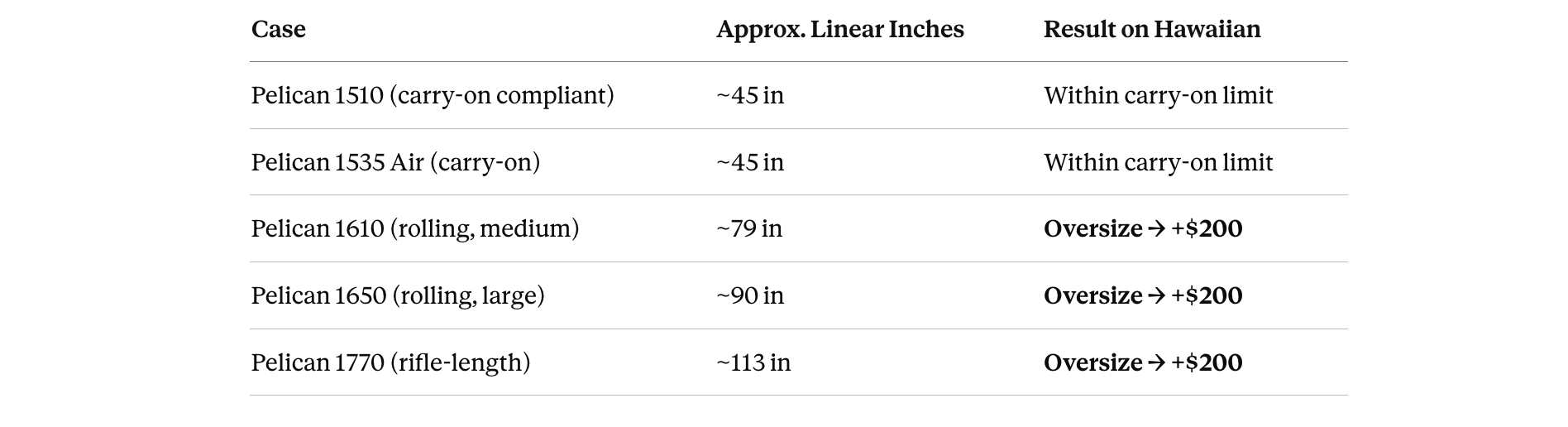
Nearly every production-grade hard case exceeds 62 linear inches. On a round-trip with two large cases, that's $200 × 2 cases × 2 directions = $800 in oversize fees alone, before bag fees. Build this into the production budget or consider freight shipping for large rigs.
Consider Freight Shipping for Large Equipment
On extended assignments or large-format productions, shipping gear directly to the destination via FedEx, UPS, or a specialist A/V freight company can be cheaper and lower-risk than flying it as checked baggage. This is especially worth calculating for broadcast-scale equipment, large lighting packages, or any item over 62 linear inches.
Weigh Cases at Home
A $15–20 luggage scale prevents $100–$200 overweight fees. The 50 lb limit is firm. Redistribute gear between cases if needed to keep each under the threshold. If flying First Class on a gear-heavy trip, the 70 lb threshold may make the upgrade worthwhile.
Route-Specific Notes for Media Professionals
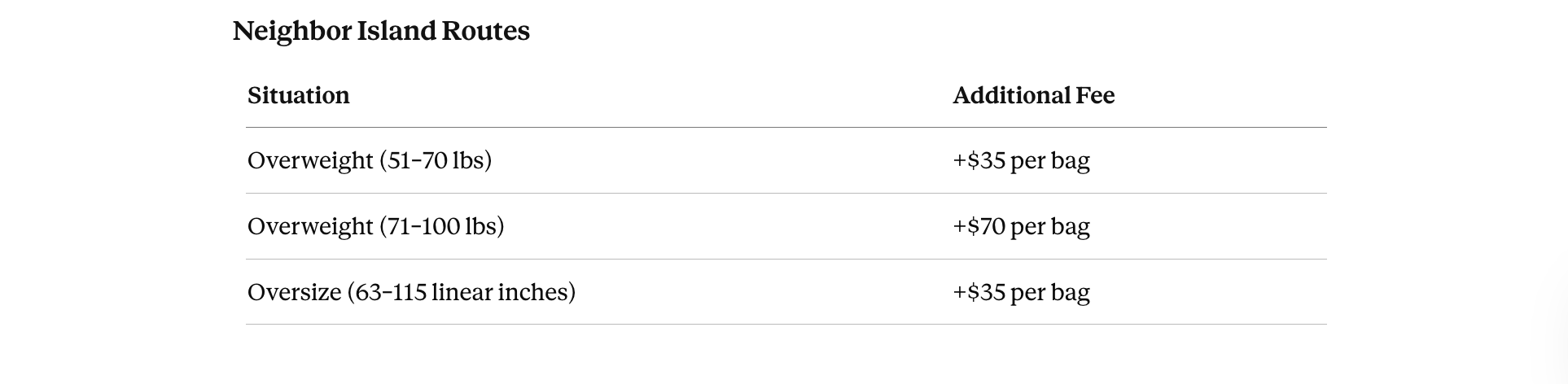
Interisland assignments (Oʻahu, Maui, Kauaʻi, Hawaiʻi Island): Neighbor Island routes use smaller aircraft with limited hold space. Fees are lower, but gear acceptance can be more constrained. Very large or oversized cases may face additional operational restrictions on smaller aircraft types. Contact Hawaiian in advance for any case larger than 62 linear inches on an interisland segment.
Mainland U.S. to Hawaiʻi: The April 2026 fee increases apply. Budget $45/$55 for first/second bags, plus oversize and overweight fees for production cases.
Transpacific routes (Japan, South Korea, Australia): For transpacific flights to destinations like Japan, Australia, and South Korea, many fares include two free checked bags. This is a genuine standout benefit for international media assignments. Confirm at booking whether your fare class includes the free bag allowance — Saver fares may not.
Connecting itineraries: If your Hawaiian Airlines flight connects to or from another carrier on the same ticket, Hawaiian's baggage rules apply throughout the journey under DOT regulations governing single-ticket itineraries. If you have separate tickets for connecting segments, the operating carrier's rules apply to each ticket independently.
Summary: Fee Reference for Media Professionals
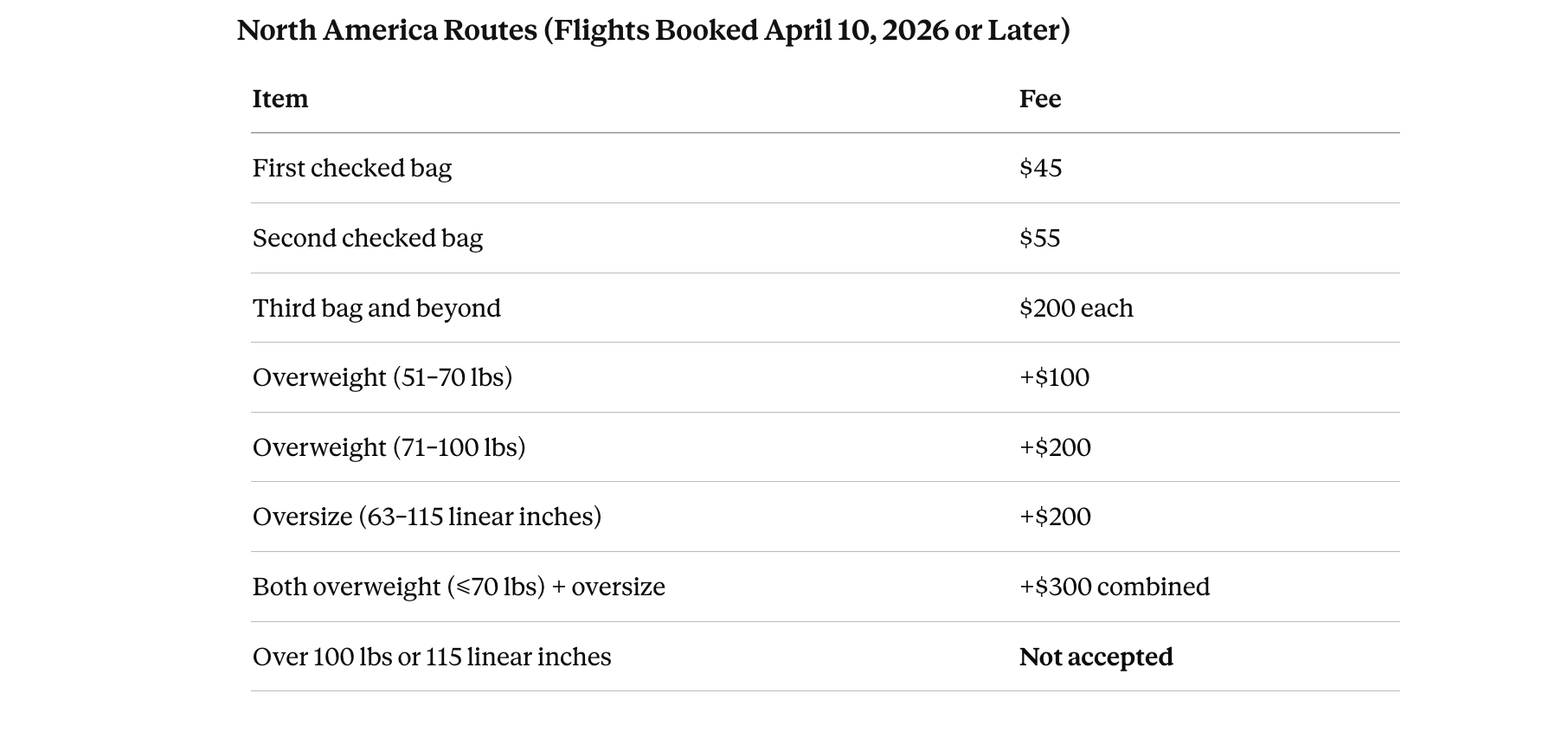


All status/card benefits cover standard bag fees only. Overweight and oversize fees apply regardless.
Fee data sourced from Hawaiian Airlines official publications and the Alaska Air Group April 2026 fee update announcement. Always verify current fees directly at hawaiianairlines.com before travelling, as policies are subject to change.


